What is Hex Nut?
author: Ann
2024-06-21
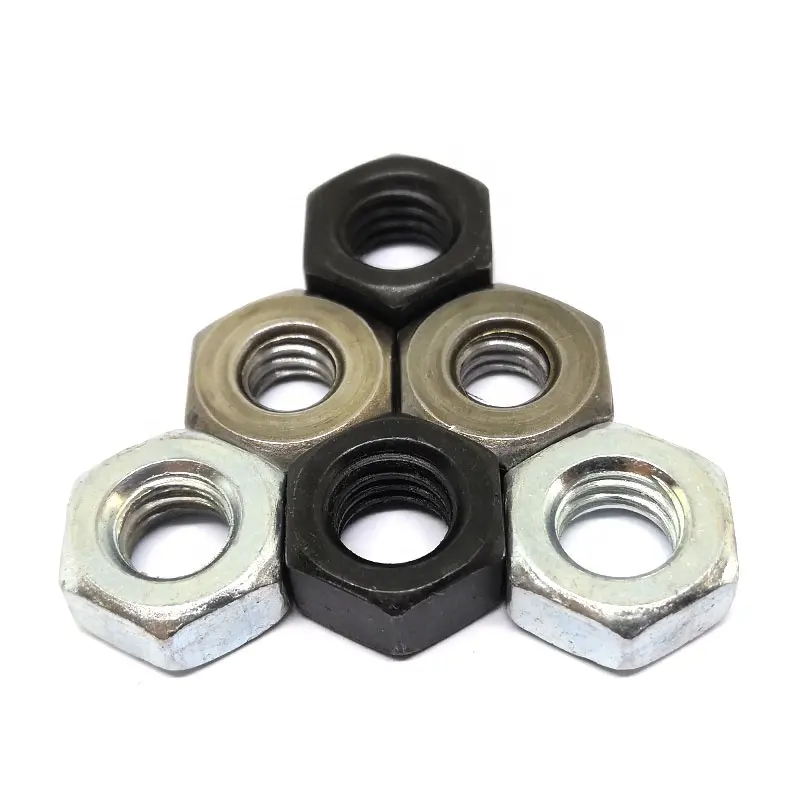
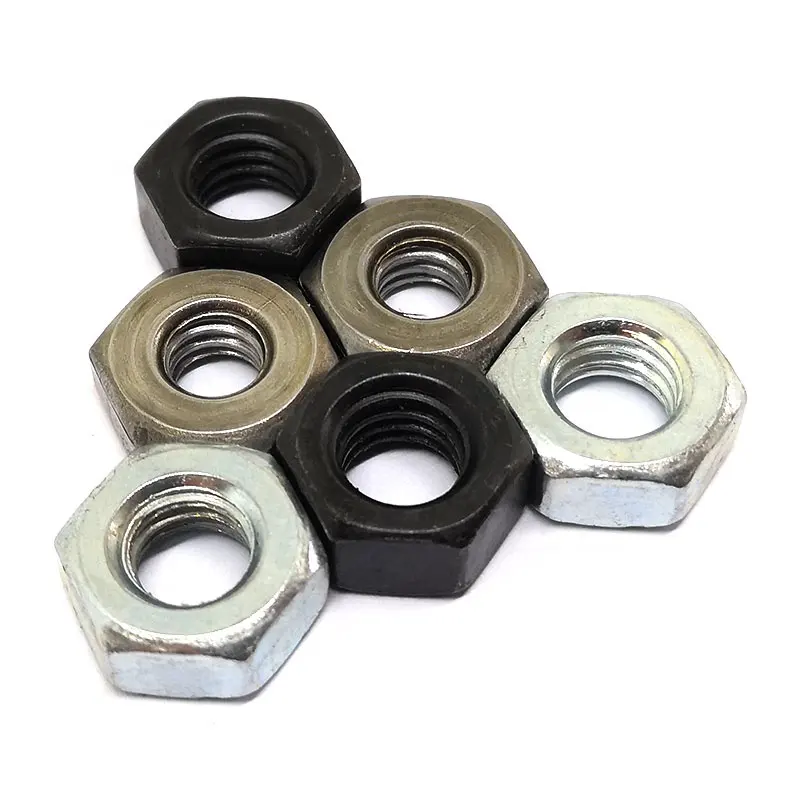
A nut is a nut, a part that is screwed together with a bolt or screw for tightening. It is a component that all manufacturing machinery must use. According to different materials, it is divided into carbon steel, stainless steel, non-ferrous metals (such as copper), etc. Several major types.


Nut Standard
Nuts mainly include national standards (GB), German standards (DIN), international standards (ISO), Japanese standards (JIS), American standards (ASTM/ANSI) and other standards based on attributes. Among them, the national standard, German standard, and Japanese standard are represented by M (such as M8, M16), and the American and British standards are represented by fractions or # (such as 8#, 10#, 1/4, 3/8).
Nut type
Hexagonal nuts are divided into three types according to their nominal thickness: type I, type II and thin type. Nuts above grade 8 are divided into two types: type 1 and type II. Type I hexagonal nuts are the most widely used. Type 1 nuts are divided into three grades: A, B, and C. Among them, grade A and grade B nuts are suitable for machines, equipment and structures with small surface roughness and high precision requirements. Grade C nuts are used on machines, equipment or structures with rough surfaces and low precision requirements; Type 2 hexagonal nuts are thicker and are mostly used in situations where assembly and disassembly are often required.
Type 1 nuts refer to ordinary hexagonal nuts with a nominal nut height m ≥ 0.8D, and their type and dimensions should comply with the regulations of GB/T6170; while the height of type 2 nuts is higher than that of type 1 nuts, and their type and dimensions should comply with GB/T6170. T6175. The purpose of adding type 2 nuts is two-fold: First, by increasing the height of the nut, a relatively cheap nut that does not require heat treatment is obtained. Because grade 8 type 1 nuts with D≤M16 do not require heat treatment, among grade 8 nuts, only the specifications of D>M16~39 use type 2 nuts. Obviously, type 1 nuts without heat treatment cannot meet the requirements of grade 9 nuts. Mechanical performance requirements. Another purpose of specifying Type 2 nuts is to obtain grade 12 nuts with better toughness. As the height of the nut increases, the guaranteed stress index can be achieved at a lower quenching and tempering hardness, thus increasing the toughness of the nut.
Type 1 nuts refer to ordinary hexagonal nuts with a nominal nut height m ≥ 0.8D, and their type and dimensions should comply with the regulations of GB/T6170; while the height of type 2 nuts is higher than that of type 1 nuts, and their type and dimensions should comply with GB/T6170. T6175. The purpose of adding type 2 nuts is two-fold: First, by increasing the height of the nut, a relatively cheap nut that does not require heat treatment is obtained. Because grade 8 type 1 nuts with D≤M16 do not require heat treatment, among grade 8 nuts, only the specifications of D>M16~39 use type 2 nuts. Obviously, type 1 nuts without heat treatment cannot meet the requirements of grade 9 nuts. Mechanical performance requirements. Another purpose of specifying Type 2 nuts is to obtain grade 12 nuts with better toughness. As the height of the nut increases, the guaranteed stress index can be achieved at a lower quenching and tempering hardness, thus increasing the toughness of the nut.
Classified by tooth spacing: standard teeth, regular teeth, fine teeth, very fine teeth and reverse teeth.
Classification by material: stainless steel hexagonal nuts and carbon steel hexagonal nuts, copper hexagonal nuts, iron hexagonal nuts.
Classified by thickness: hexagonal thick nuts and hexagonal thin nuts.
Classified by usage: hot-melt copper nuts, hot-pressed copper nuts, embedded copper nuts and ultrasonic copper nuts.
Advantages of hexagonal nuts
1. Connection and fixation: Hexagonal nuts are used in conjunction with bolts, screws, etc. to achieve fast connection between components through thread engagement. After the bolts pass through the holes of two or more parts to be connected, screw on the hexagonal nuts and apply pre-tightening force by tightening the nuts to make the components fit closely and maintain a stable positional relationship to ensure the firmness and stability of the entire structure. sex.
2. Adjustment and positioning: In many fields such as mechanical equipment, instrumentation, furniture, building structures, etc., hexagonal nuts can be used to adjust the relative position between parts, or to accurately position a certain component. By loosening or tightening the nut, the spacing, angle or height of the components can be easily adjusted to meet the needs of assembly, maintenance or adjustment.
3. Bear load: The threaded connection formed by the combination of hexagonal nuts and bolts has good load-bearing capacity and can effectively transmit and withstand various loads such as axial tension, shear, vibration, etc. In high-strength application scenarios such as heavy machinery, bridges, vehicles, aerospace, etc., hexagonal nuts serve as key fastening components and play an important role in mechanical support.
4. Anti-loosening protection: When it is necessary to prevent thread loosening due to vibration, thermal expansion and contraction, hexagonal nuts are often used in conjunction with anti-loosening devices such as lock washers, nylon inserts, double nuts, etc. to enhance the reliability of the connection. , to prevent accidental loosening.
2. Adjustment and positioning: In many fields such as mechanical equipment, instrumentation, furniture, building structures, etc., hexagonal nuts can be used to adjust the relative position between parts, or to accurately position a certain component. By loosening or tightening the nut, the spacing, angle or height of the components can be easily adjusted to meet the needs of assembly, maintenance or adjustment.
3. Bear load: The threaded connection formed by the combination of hexagonal nuts and bolts has good load-bearing capacity and can effectively transmit and withstand various loads such as axial tension, shear, vibration, etc. In high-strength application scenarios such as heavy machinery, bridges, vehicles, aerospace, etc., hexagonal nuts serve as key fastening components and play an important role in mechanical support.
4. Anti-loosening protection: When it is necessary to prevent thread loosening due to vibration, thermal expansion and contraction, hexagonal nuts are often used in conjunction with anti-loosening devices such as lock washers, nylon inserts, double nuts, etc. to enhance the reliability of the connection. , to prevent accidental loosening.
5. Convenient disassembly and assembly: Compared with other types of nuts, such as square nuts, butterfly nuts, etc., the hexagonal shape design of hexagonal nuts makes them easy to install and disassemble using tools such as standard wrenches, socket wrenches, ratchet wrenches, etc., greatly Improves work efficiency, especially when space is limited or work needs to be done quickly.
6. Standardization and interchangeability: Hexagonal nuts follow international or national standards (such as ISO, ANSI, DIN, etc.) and have unified dimensions, tolerances and performance levels, ensuring compatibility and interoperability between similar products produced by different manufacturers. Interchangeability facilitates procurement, inventory management and on-site maintenance.
To sum up, hexagonal nuts play a key role in many fields such as engineering, manufacturing, and construction. They are important basic components for connecting components, carrying loads, adjusting positioning, preventing loosening, and ensuring stable operation of the system.
6. Standardization and interchangeability: Hexagonal nuts follow international or national standards (such as ISO, ANSI, DIN, etc.) and have unified dimensions, tolerances and performance levels, ensuring compatibility and interoperability between similar products produced by different manufacturers. Interchangeability facilitates procurement, inventory management and on-site maintenance.
To sum up, hexagonal nuts play a key role in many fields such as engineering, manufacturing, and construction. They are important basic components for connecting components, carrying loads, adjusting positioning, preventing loosening, and ensuring stable operation of the system.
Chipboard Screw